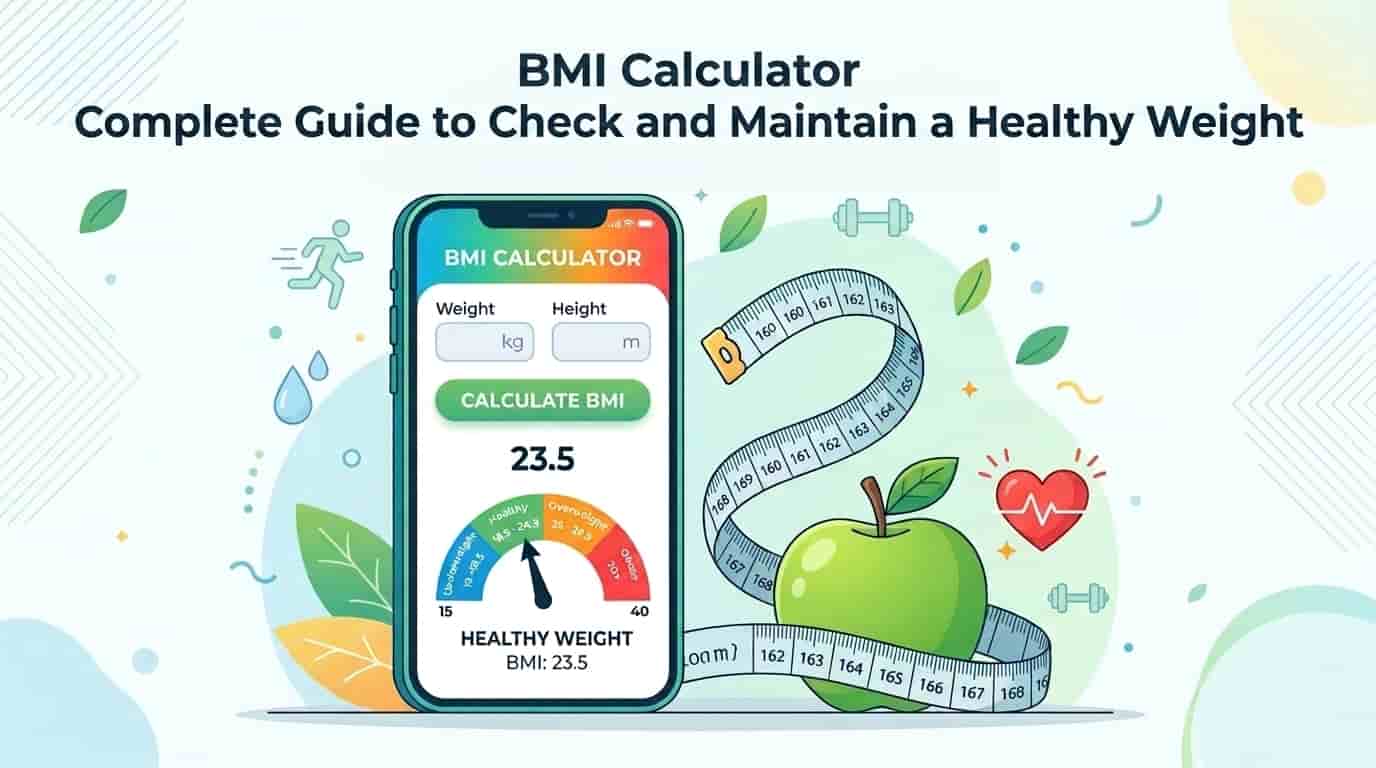
BMI Calculator: Complete Guide to Check and Maintain a Healthy Weight!
A bmi calculator is a simple health tool that measures your Body Mass Index using your height and weight. It helps you understand whether your weight falls into a healthy range. Doctors, fitness trainers, and health experts use BMI as a quick screening method to identify possible weight-related health risks. Although it does not measure body fat directly, it provides a useful starting point for improving your overall health.
Using a BMI calculator is easy. Enter your height and weight, and the calculator instantly shows your BMI score. The result tells you if you are underweight, at a healthy weight, overweight, or obese. This information can help you make better decisions about your diet, exercise, and lifestyle.
How Does a BMI Calculator Work?
A bmi calculator uses a standard mathematical formula to compare your height and weight.
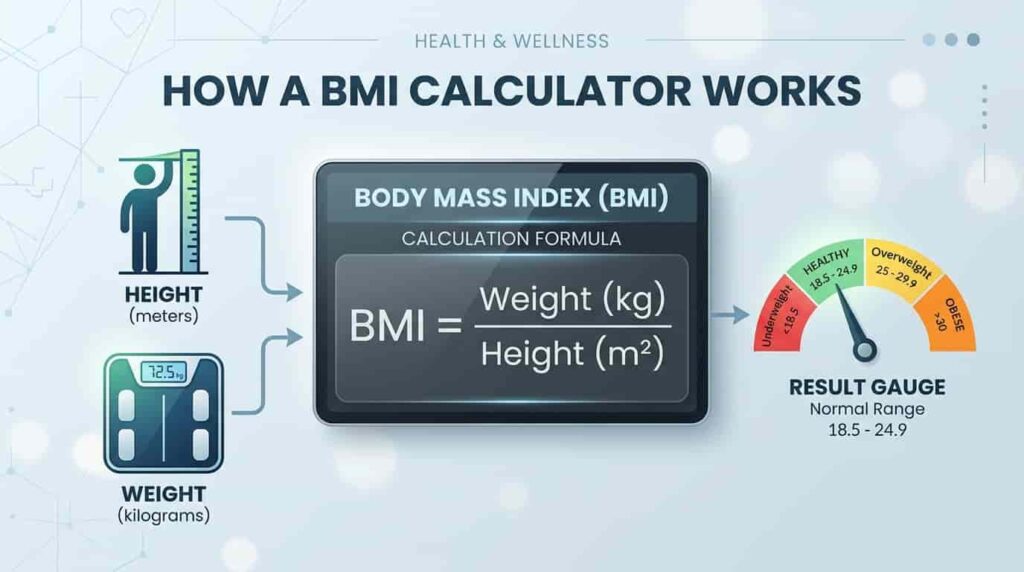
Formula:
BMI = Weight (kg) ÷ Height (m²)
For example, if your weight is 70 kilograms and your height is 1.75 meters, your BMI is:
70 ÷ (1.75 × 1.75) = 22.9
This score falls within the healthy weight range.
Most online BMI calculators automatically perform this calculation. You can also enter your height in feet and inches and your weight in pounds because many calculators convert the measurements automatically.
BMI Categories Explained
Understanding your BMI result is important because each category reflects a different health status.
Underweight
A BMI below 18.5 means you are underweight. People in this category may have low energy, poor nutrition, or a higher risk of weakened immunity and bone problems.
Healthy Weight
A BMI between 18.5 and 24.9 is considered healthy. Maintaining this range lowers the risk of many chronic diseases when combined with regular exercise and balanced eating.
Overweight
A BMI between 25 and 29.9 indicates overweight. Extra body weight can increase the risk of diabetes, heart disease, high blood pressure, and joint pain.
Obesity
A BMI of 30 or above is classified as obesity. This condition raises the chances of developing several serious health problems and often requires long-term lifestyle improvements.
Why Is a BMI Calculator Important?
A bmi calculator is useful because it provides a quick overview of your weight status. It helps you identify whether you need to lose, gain, or maintain your current weight.
Some key benefits include:
- Fast and easy to use
- Free on most health websites
- Helps monitor weight changes
- Supports fitness goals
- Encourages healthy habits
- Useful during routine health checkups
- Helps reduce future health risks
Who Should Use a BMI Calculator?
Most adults can safely use a bmi calculator. It is especially helpful for people who want to improve their health or manage their weight.

It is suitable for:
- Men and women over 18 years
- People starting a fitness journey
- Individuals planning weight loss
- Office workers with inactive lifestyles
- People with a family history of obesity
- Anyone who wants to monitor their health
However, BMI may not accurately reflect the health of athletes, pregnant women, children, or older adults with low muscle mass.
How to Use a BMI Calculator Correctly
Follow these simple steps to get an accurate BMI result:
- Measure your weight without heavy clothing.
- Measure your height without shoes.
- Enter your height and weight into the calculator.
- Click the calculate button.
- Read your BMI score.
- Compare your score with the BMI chart.
- Discuss the result with a healthcare professional if needed.
Factors That Affect BMI Accuracy
Although a bmi calculator is helpful, it has some limitations. It does not measure body fat percentage, muscle mass, or fat distribution.
For example, athletes often have higher BMI scores because muscle weighs more than fat. Older adults may have a normal BMI but still carry excess body fat. Genetics, age, gender, and body type also influence overall health.
BMI Calculator for Men and Women
A bmi calculator works the same way for adult men and women because it uses height and weight to calculate Body Mass Index. However, body composition can be different. Men usually have more muscle mass, while women naturally have a higher percentage of body fat. Even with these differences, the standard BMI categories remain the same for most adults. Health professionals often use BMI together with waist measurement, body fat percentage, and medical history to get a better picture of overall health.
BMI Calculator for Children and Teenagers

Children and teenagers should not use the same BMI ranges as adults. Their bodies are still growing, so age and gender must be considered. Doctors use BMI-for-age growth charts to determine whether a child has a healthy weight. Parents should avoid making health decisions based only on BMI and should consult a healthcare professional for proper guidance.
Healthy Ways to Improve Your BMI
If your BMI is outside the healthy range, small lifestyle changes can make a big difference over time.
Eat a Balanced Diet
Choose fruits, vegetables, whole grains, lean protein, healthy fats, and low-fat dairy products. Reduce sugary drinks, processed foods, and excessive fast food.
Stay Physically Active
Exercise for at least 150 minutes each week. Walking, cycling, swimming, jogging, and strength training can help you maintain a healthy weight and improve overall fitness.
Get Enough Sleep
Adults should aim for seven to nine hours of quality sleep each night. Poor sleep may increase hunger and make weight management more difficult.
Drink Plenty of Water
Water supports digestion, keeps you hydrated, and may help control appetite. Replace sugary beverages with water whenever possible.
Track Your Progress
Use a bmi calculator every few weeks instead of every day. Combine BMI tracking with healthy habits to measure long-term progress.
Common BMI Calculator Mistakes
Many people misunderstand BMI results. Avoid these common mistakes:
- Using incorrect height or weight measurements.
- Checking BMI with shoes or heavy clothing.
- Assuming BMI measures body fat directly.
- Ignoring muscle mass and body composition.
- Relying only on BMI without considering overall health.
- Comparing adult BMI results with children’s BMI charts.
Understanding these limitations helps you use BMI more effectively.
Benefits of Using a BMI Calculator Regularly
Regular BMI checks help you notice changes before they become serious health concerns. Monitoring your BMI can motivate you to improve your eating habits, exercise consistently, and maintain a healthy lifestyle. It also provides useful information during medical checkups and fitness assessments. While BMI should not replace professional medical advice, it remains an easy and affordable tool for tracking weight over time.
FAQs:
1. What is a normal BMI range?
A healthy BMI for most adults is between 18.5 and 24.9.
2. Is a BMI calculator accurate?
It is accurate for estimating weight status but does not measure body fat or muscle mass.
3. How often should I check my BMI?
Checking your BMI once every few weeks or once a month is usually enough for tracking progress.
4. Can athletes use a BMI calculator?
Yes, but athletes may have higher BMI scores because of greater muscle mass, so additional health measurements are recommended.
5. Does BMI change with age?
The BMI formula stays the same for adults, but body composition changes with age, so BMI should be considered alongside other health factors.
6. Can I improve my BMI naturally?
Yes. Eating a balanced diet, exercising regularly, sleeping well, drinking enough water, and maintaining healthy daily habits can gradually improve your BMI and overall health.
Conclusion:
A bmi calculator is a quick, simple, and effective way to understand your weight status. Although it does not measure body fat directly, it provides valuable information that can help you improve your health. By combining BMI with a balanced diet, regular exercise, quality sleep, and routine medical checkups, you can achieve and maintain a healthier lifestyle. Use your BMI score as a guide, not a final diagnosis, and focus on building long-term healthy habits rather than chasing a perfect number.
Related post: